
- News
- City News
- bengaluru News
- Invest in friends for a happy old age
Trending
This story is from May 28, 2017
Invest in friends for a happy old age
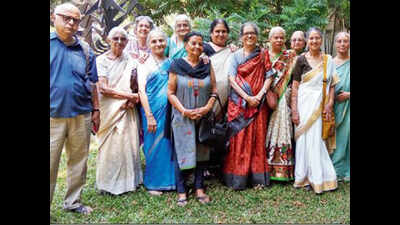
In 2009, Sastry was diagnosed with cancer.

If Sastry looks like he is in his early 60s, 76-year-old Sathya Chari looks like she's in her mid-forties. Three months ago, she went for a tour of Kerala with friends from her yoga class. “There's a difference between the love your friends give you and the love you get from your family,“ she says. “After all, when you're young, it's taken for granted that there are things you can share with your friends that you can't share with your family. Why is it that people think it holds any less true as you grow older?“ she asks.
Live long and prosper?
As societies develop and become economically better off, birth rates decline, and lifespans lengthen, the proportion of older people in the population goes up. This is especially true of Bengaluru, which was, after all, a pensioner's paradise.
But with longer lifespans come a group of aging-related issues, mental and physical. Loneliness, depression, dementia, Alzheimers words and names that were rarely heard thirty years ago, but which have become depressingly common these days.
Dr. Naren P Rao, associate professor of psychiatry, NIMHANS, is part of the IISc's Centre for Neuroscience. He, along with others, has been working on a study on aging and age-related conditions. “Around 300 people are examined every year using tools like magnetic resonance imaging, advanced genetics and molecular tests for 5-10 years,“ he says. The study will help with early detection of people at risk of developing dementia so that therapeutic strategies can be initiated early, he says.
According Rao, it is important to identify the symptoms of memory decline at an early stage and meet the doctor early than wait until the disease progresses to a severe state. And for that, it helps to have people who can notice the early warning signs people who engage the senior in regular conversation or participate in shared activities.And often, these aren't family members.
Industrial revolution
“There is a culturally mediated way of approaching old age where the care of older people happens within the family. Now this had been the norm for societies everywhere until the beginning of the industrial revolution.But with the industrial era came large cities and different ways of organizing society. The idea of family members taking care of older people gradually became infeasible, especially as geographical mobility increased and family members would move away in search of economic opportunity or education,“ says Dr Gopukrishnan Pillai, consultant in geriatric medicine at Narayana Health. “Now, in our society, even if seniors live in the same physical space as their children and do not experience physical loneliness, the quality of the relationship may not be strong enough to keep emotional loneliness away. There's also the issue of enforced infantilism that comes with ageism. When we speak of older people, we find ourselves talking about disability, and not ability even though these are people who have led full lives, shouldered significant responsibilities and have a wealth of experience,“ he says.
And families, however loving they may be, sometimes fail to recognize this. For Padmavathi, an 81-year-old former engineer at All India Radio, the choice was clear. Her US-based son asked her to leave her Malleswaram home to join him. She wasn't interested. “My friends are here,“ she says, gesturing at the laughing, cheerful group around her at the Nightingales Elders Enrichment Centre in Malleswaram. “Why would I want to leave?“
Getting together
“You've probably heard of my brother, CH Lokanath, the actor,“ says 78-year-old CH Choodanath. The 'CH', he says, somewhat shyly, stands for Channapatna Hanumanthappa. “And while my physical age is 78, my biological age is 60,“ he says with a twinkle in his eye. The former general manager at HMT retired in 1997. Three years ago, Choodanath, an avid gardener, was at the Sri Vinayaka Nursery in JP Nagar when he heard that the Nightingales Trust's Bagchi Centre for Active Ageing had just opened nearby. “I joined up immediately,“ he says. For him, the biggest draw, apart from the people he would meet and the friends he would make, was the seated aerobics sessions.“Even though we were sitting, at the end of the hour, we were all sweating,“ he says, remembering his first session. “I went back home, feeling that I had given my body and my mind a good workout.“ Since then, his visit to his friends at the Bagchi centre has become a regular part of his day. “My wife was initially jealous,“ he says smiling.
For Choodanath, who remembers going from school to school in Mysuru, carrying a huge Indian flag on August 15, 1947, it's also about shared values. He talks about his career at HMT, where he saw the steady decline of one of India's most prestigious PSUs into shell of its former self. “It's its former self. “It's a different world now,“ he says. “But here, with my friends, I feel more optimisitic and their presence strengthens my belief in the future.“
At 61, MR Suresh is one of the youngest people at the Bagchi centre. He talks with the easy assurance of a lifelong marketing man. “I come here three times a week. It does me good to get out home. I come here for the camaraderie, of course,“ he says. He pauses and reflects. “Here you find a different kind of role model, people you want to emulate in the way they handle what life throws at them,“ he says.
Not everybody finds it easy to make friends after a certain age, though. For 83-year-old Varadarajulu, the loss of his wife a year ago left him with crippling loneliness. He also found it difficult to meet new people. “My son calls me from Delhi once in a while, but it's not the same thing. I started visiting the temple a lot more. There are others there, people of my age, regular visitors. I've had a few good conversations with them. God is with me,“ he says. He smiles. “The prasada is also good.“
Building a convoy
There's something called the 'Convoy Theory of Social Relations'. In this model, people go through life embedded in a personal network of individuals from whom they give and receive social support. “Put simply, the peer group equivalent of a family group is a social convoy,“ says Pillai. And for older adults, social convoys are critical to their well-being. “But people don't think of developing these peer networks until after retirement, sometimes until they are in their seventies. But people need to start believing that they are going to grow old by themselves. You are not going to grow old with your brother or your cousins or sometimes, even your children or spouse. And you have to invest in and developpeer relationships as you go along,“ he says. “You have to factor this in into the decisions you make through your life.“
End of Article
FOLLOW US ON SOCIAL MEDIA




Photostories

Hot Picks
TOP TRENDING
Popular Categories
Hot on the Web
Top Trends
Shantanu NaiduRussell WilsonsTom BradyAUS vs PAK Live ScorePakistan Cricket FanSuryakumar YadavNobel Peace PrizeMahadev Betting AppNew UPI Transaction LimitRatan Tata DiesPM ModiUGC NET Result 2024Management Colleges of IndiaTop Medical Colleges of IndiaTop Engineering Colleges of IndiaTop Pharmacy Colleges of IndiaLive Cricket Score
Trending Topics
Diwali WishesJigra ReviewDussehra WishesVettaiyan OTT ReleaseVettaiyan CollectionVettaiyan ReviewBlack Movie ReviewDevara CollectionBigg Boss 18Deepika PadukoneShraddha KapoorRatan Tata Passed AwayJigra Movie ReviewVettaiyan Movie ReviewSwatantrya Veer SavarkarDussehra 2024Elon MuskKing Legacy CodesUltimate Football Codes October 2024Wordle Answer
Living and entertainment
Latest News
Navratri 2024: Jaya Bachchan and Shweta Bachchan join Rani Mukerji at the Durga puja pandalOff Argentina's Patagonian coast, whales and their calves dive deep for foodHappy Dussehra 2024: Images, Quotes, Wishes, Messages, Pictures and GreetingsApplications for new power connections among services moved exclusively onlineHappy Dussehra 2024: Top 50 Wishes, Messages, Images and Quotes to Share with Your Loved OnesFortified-food plan faces questions from two PM panel membersKrushna Abhishek shares a heartwarming post for mama Govinda; says 'jab body mein adha blood supremely talented actor Govinda ka ho...'Could Tyreek Hill Return to the Chiefs? Cryptic Posts Fuel Trade SpeculationHappy Dussehra 202: Top 50 Wishes, Messages and Quotes to share with your loved onesPutin won't discuss Ukraine peace with Germany's Scholz, Berlin says'Jigra' box office collection day 1 early estimate: The Alia Bhatt starrer faces tough competition with Rajinikanth's starrer 'Vettitan' and Rajkummar Rao's Vicky Vidya Ka Woh Wala Video'Robert Gronkowski Reacts to His Hilarious Impression in FX's American Sports Story: Aaron HernandezIf Rahul Gandhi fails to deliver, INDIA bloc may make LoP post rotational: BJP‘Kallanum Bhagavathiyum’: The Vishnu Unnikrishnan and Mokksha starrer is set to get a sequelAlia Bhatt, Bipasha Basu, Rhea Chakraborty and others seek blessings at Kajol and Rani Mukerji's Durga Puja pandal - See photosAI is having its Nobel moment. Do scientists need the tech industry to sustain it?Trapped leopard gasps to death as foresters wait 12 hours for dartsSalami slicing: How China is eating into India’s territory
Copyright © 2024 Bennett, Coleman & Co. Ltd. All rights reserved. For reprint rights: Times Syndication Service